


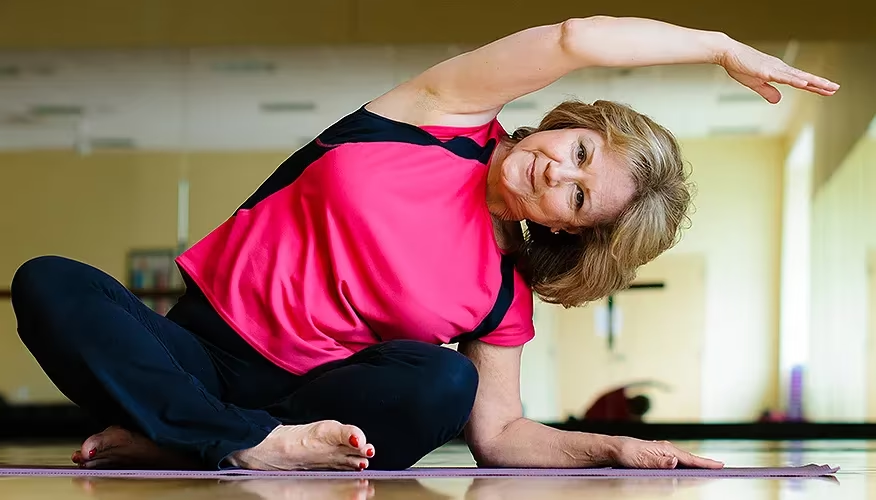
Aging is a natural, biological progression characterized by the gradual decline of cellular function, tissue resilience, and physiological capacity. Over time, the body experiences structural shifts: muscle mass diminishes, bone density decreases, joints stiffen, and the nervous system loses some of its adaptive efficiency. While these chronological changes are inevitable, the rate at which the body degrades is highly malleable, shaped heavily by daily lifestyle practices.
Many people turn to high-impact exercise routines to combat physical decline, only to find that their aging joints cannot tolerate the repetitive stress. This is where yoga emerges as an exceptional, evidence-based modality for supporting long-term longevity. Far from being just a flexibility exercise, yoga is a holistic, mind-body system that systematically addresses the multi-faceted challenges of aging. By integrating physical postures, breath control, and mindful awareness, yoga preserves structural mobility, enhances neurological health, lowers systemic inflammation, and nurtures psychological resilience, allowing individuals to age with vitality and grace.
Preserving Musculoskeletal Integrity and Mobility
One of the most profound physical threats to healthy aging is the progressive loss of musculoskeletal function. Sarcopenia, which is the age-related loss of skeletal muscle mass and strength, typically begins after the age of thirty and accelerates significantly after sixty. This loss of muscle tissue is frequently accompanied by a decline in bone mineral density, leading to osteopenia or osteoporosis, and a stiffening of the connective tissues surrounding the joints.
Yoga addresses these structural vulnerabilities through controlled, weight-bearing isometric contractions. Holding specific yoga postures forces the muscles to work against the resistance of gravity, stimulating muscle protein synthesis and preserving lean tissue mass.
The musculoskeletal benefits of a consistent yoga practice include:
-
Joint Lubrication and Cartilage Health: Joint cartilage lacks a direct blood supply; it relies on the movement of synovial fluid to deliver essential nutrients and remove metabolic waste. The dynamic, multi-directional stretching of yoga compresses and decompresses cartilage, ensuring optimal joint lubrication and reducing the stiffness associated with osteoarthritis.
-
Bone Mineral Preservation: Weight-bearing yoga poses, such as standing balances and planks, exert a gentle mechanical stress on the skeletal architecture. This mechanical pull stimulates osteoblasts, which are the specialized cells responsible for synthesizing and depositing new bone tissue.
-
Myofascial Flexibility: Connective tissue, or fascia, tends to dehydrate and form tight cross-links as the body ages, severely restricting the natural range of motion. Yoga involves sustained, gentle stretching that restores hydration and elasticity to the fascial network, preventing the hunched posture often associated with advanced age.
Enhancing Proprioception, Neuromuscular Function, and Fall Prevention
Accidental falls represent a major public health hazard for older adults, serving as a primary cause of debilitating injuries, hip fractures, and a subsequent loss of independent living. Fall risk spikes with age due to a combination of muscle weakness, slower neurological processing, and a decline in proprioception, which is the body subconscious ability to sense its position, movement, and spatial orientation.
Yoga serves as an exceptional tool for neurological training because it continuously challenges and refines the body balance mechanisms. Standing balancing postures force the brain, sensory nerves, and deep stabilizing muscles to communicate with rapid precision.
By practicing these postures regularly, older adults strengthen the neuromuscular pathways that control sudden postural adjustments. The foot and ankle complexes become highly reactive, allowing an individual to catch themselves quickly if they trip on an uneven surface. Furthermore, the intense concentration required to balance trains the central nervous system to remain calm under physical instability, transforming the reactive stumble into a controlled, immediate correction.
Modulating Systemic Inflammation and Cardiovascular Risk
Deep within the cellular landscape, aging is closely intertwined with a phenomenon known as inflammaging. This term describes a state of chronic, sterile, low-grade systemic inflammation that develops progressively as the human body ages. This persistent inflammatory environment actively damages healthy cellular structures, accelerating the onset of age-related diseases like atherosclerosis, type two diabetes, Alzheimer disease, and various cardiovascular pathologies.
Yoga exerts a powerful downregulatory effect on this destructive inflammatory cascade. Chronic stress triggers the autonomic nervous system to remain stuck in a sympathetic state, commonly known as the fight-or-flight response, which floods the bloodstream with cortisol and pro-inflammatory signaling molecules called cytokines.
Yoga reverses this pattern by stimulating the vagus nerve, which is the main highway of the parasympathetic nervous system, or the rest-and-digest response. Slow, deep, diaphragmatic breathing practices utilized during yoga send immediate signals to the brain indicating that the body is safe. This neural shift lowers the heart rate, reduces blood pressure, improves endothelial function within the blood vessels, and dampens the production of inflammatory markers, providing comprehensive protection for the cardiovascular system.
Cognitive Preservation and Neuroplasticity
Age-related cognitive decline, varying from mild forgetfulness to severe neurodegenerative conditions, is one of the most widely feared aspects of growing older. As the brain ages, it naturally experiences a reduction in gray matter volume, particularly within the hippocampus, which is the primary center responsible for memory formation, learning, and emotional regulation.
Modern neuroimaging studies demonstrate that the dual practice of physical movement and mindful meditation inherent in yoga can actively alter brain structure through neuroplasticity. Neuroplasticity is the brain capacity to form new neural connections and reorganize itself in response to learning or experience.
Individuals who practice yoga consistently show a preservation of gray matter volume in critical regions of the cerebral cortex. The intense sensory focus required to align the physical body, coordinate the breath, and maintain mental presence acts as a rigorous cognitive workout. This practice increases the production of brain-derived neurotrophic factor, a vital protein that supports the survival of existing neurons and encourages the growth of new ones, effectively buffering the brain against age-related cognitive atrophy.
Cellular Longevity and the Role of Telomeres
At the absolute frontier of anti-aging research lies the study of telomeres. Telomeres are protective nucleotide caps located at the terminal ends of human chromosomes, often compared to the plastic tips on the ends of shoelaces. Each time a cell divides, its telomeres shorten slightly. When telomeres become critically short, the cell can no longer divide, entering a permanent state of cellular arrest known as senescence, or dying completely. Shortened telomeres serve as an objective biomarker for accelerated biological aging.
Emerging cellular research suggests that lifestyle interventions capable of reducing psychological stress and systemic inflammation can positively influence telomere biology. Chronic, unmanaged psychological stress produces high levels of oxidative stress, which accelerates the degradation of these chromosomal caps.
By providing a reliable method for systemic stress reduction, yoga lowers the internal oxidative burden on the body cells. Some clinical trials have shown that dedicated mind-body practices, including yoga and meditation, can boost the activity of telomerase, which is the specific enzyme responsible for repairing and maintaining the length of telomeres. By protecting the integrity of these chromosomal shields, yoga supports longevity at the most fundamental cellular level.
Implementing a Safe and Sustainable Senior Practice
To reap the longevity benefits of yoga without risking injury, older adults must approach the practice with programmatic wisdom and patience. The goal of senior yoga is not to perform acrobatic shapes, but to cultivate functional alignment and internal vitality.
To build a sustainable routine, prioritize the following guidelines:
-
Seek Qualified Instruction: Look for instructors who possess specialized training in gentle, restorative, or chair yoga for seniors, ensuring they understand how to modify poses for specific health conditions.
-
Utilize Physical Props: Never hesitate to use yoga blocks, straps, blankets, or a sturdy chair. Props are not signs of weakness; they are intelligent tools that adapt the pose to your unique anatomical structure, ensuring safety and stability.
-
Honor Physical Boundaries: Avoid the temptation to push through sharp pain or intense joint discomfort. Yoga should challenge your muscles gently while leaving your joints feeling comfortable and supported.
-
Maintain Consistency Over Intensity: A fifteen-minute daily practice consisting of gentle joint movements and deep breathing will yield far greater longevity benefits than a grueling, ninety-minute class performed only once every two weeks.
Frequently Asked Questions
Can an individual begin practicing yoga if they have severe spinal issues like osteoporosis?
Yes, individuals with osteoporosis can safely practice yoga, but they must strictly avoid specific movements that place excessive stress on fragile bones. People with compromised bone density must avoid deep spinal forward folds, extreme twisting, and rapid, uncontrolled movements, as these can increase the risk of compression fractures in the vertebrae. A modified practice focusing on gentle back extensions, standing poses, and neutral spine alignments is highly beneficial for building muscular support around the skeleton.
What is chair yoga and is it as effective as standard floor-based yoga?
Chair yoga is a gentle adaptation of standard yoga where all the postures are performed while seated in a chair or standing while using the chair for physical balance. It is exceptionally effective for individuals with severe mobility limitations, chronic balance disorders, advanced arthritis, or those recovering from joint replacement surgeries. Chair yoga delivers the exact same neurological, respiratory, and psychological benefits as standard yoga while entirely removing the fear and physical strain of transitioning down to and up from the floor.
How does the regular practice of yoga influence the quality of sleep in older adults?
Sleep architecture naturally changes with age, often resulting in fragmented sleep, early waking, and less time spent in deep, restorative sleep phases. Yoga significantly improves sleep quality by calming the overactive central nervous system. Performing calming yoga postures and slow pranayama, which are traditional breathing exercises, in the evening shifts the body into a deep parasympathetic state. This reduces nightly cortisol spikes, lowers muscle tension, and eases the mental chatter that frequently causes insomnia.
Can yoga assist in managing chronic pain conditions commonly associated with aging?
Yes, yoga is an excellent tool for chronic pain management, particularly for conditions like lower back pain, rheumatoid arthritis, and fibromyalgia. Chronic pain often triggers a fear-avoidance loop, where a person stops moving out of fear of pain, causing the surrounding muscles to weaken and stiffen, which ultimately worsens the discomfort. Yoga safely breaks this cycle by introducing gentle, low-impact movement that increases blood flow to painful areas, releases tight muscle shielding, and rewires the brain perception of pain through mindfulness.
Is there a specific style of yoga that is universally recommended for healthy aging?
While there is no single style that fits everyone, gentle and restorative forms are generally best for older adults. Hatha yoga offers a slow, methodical pace that allows ample time to learn proper alignment. Restorative yoga uses extensive props to support the body completely, allowing for deep relaxation without muscular strain. Yin yoga can be beneficial for targeting deep connective tissues, but it should be approached with caution to prevent over-stretching vulnerable joints.
How quickly can an older adult expect to see improvements in their balance after starting yoga?
Improvements in neuromuscular coordination and stability can occur relatively quickly. Many older adults notice a measurable improvement in their dynamic balance, physical confidence, and walking stability within six to eight weeks of consistent practice, such as attending two sessions per week. These initial gains are largely driven by neurological adaptations, as the brain becomes more efficient at signaling the stabilizing muscles of the ankles, knees, and core.
Does practicing yoga provide enough cardiovascular exercise to replace traditional cardio?
Gentle, slow-paced yoga practices do not elevate the heart rate sufficiently to meet the clinical guidelines for moderate-to-vigorous aerobic exercise. While yoga provides immense cardiovascular protection by reducing systemic stress and lowering blood pressure, it should be viewed as a complement to, rather than a total replacement for, traditional cardiovascular activities. Older adults should combine their yoga practice with regular aerobic movements like brisk walking, swimming, or cycling to maintain optimal cardiorespiratory fitness.

Comments are closed.