


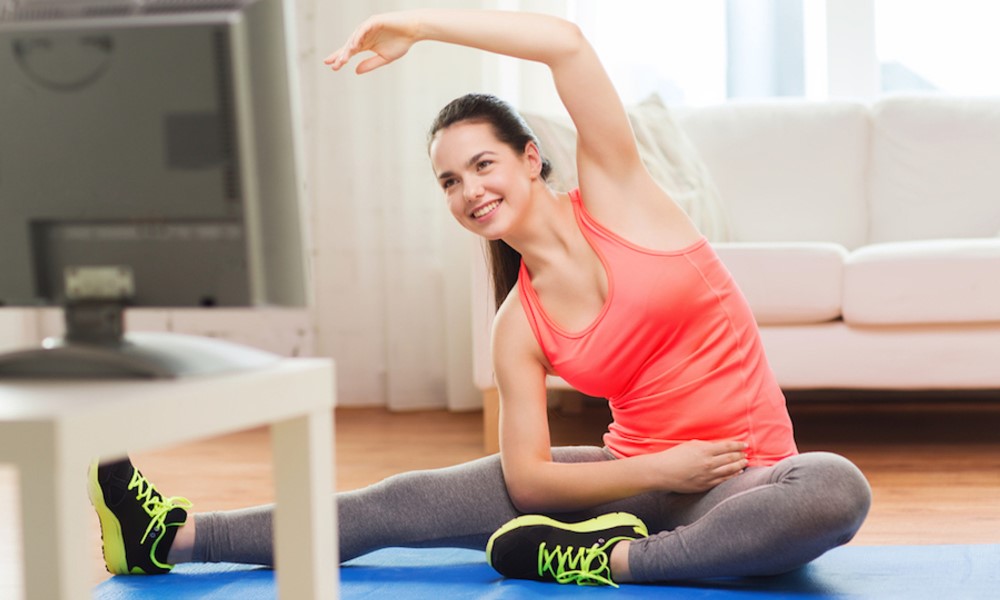
Modern professional environments demand long hours, constant connectivity, and high cognitive engagement. For many corporate workers, executives, and entrepreneurs, dedicating two hours a day to commuting to a commercial gym, changing, working out, and returning home is a luxury they simply cannot afford. Consequently, physical fitness is frequently discarded from the daily schedule, resulting in decreased energy levels, weight gain, and increased systemic stress.
However, maintaining optimal health does not require hours of daily training. Home fitness solutions have evolved beyond basic calisthenics, offering highly efficient, scientifically validated workout modalities tailored explicitly for individuals with constrained schedules. By optimizing workout structure, utilizing minimal equipment, and maximizing intensity, busy professionals can achieve peak physical conditioning without ever leaving their living rooms.
The Physiology of Time-Efficient Training
To understand why short home workouts are effective, one must look at how the human body adapts to exercise stress. Traditional exercise models rely heavily on steady-state cardiovascular training, which requires a significant time commitment to yield metabolic results. In contrast, time-efficient home training relies on metabolic conditioning and high-density training blocks.
The primary physiological mechanism at play during brief, high-intensity home workouts is Excess Post-Exercise Oxygen Consumption. When the body is forced to work at a high capacity for a short period, it creates an oxygen deficit. After the workout ends, the metabolism remains elevated for hours as the body works to restore oxygen levels, clear metabolic waste products, and repair muscle tissue. This means that a well-structured fifteen-minute home workout can stimulate fat oxidation and metabolic expenditure long after the session has concluded.
Furthermore, resistance-based home workouts trigger myofibrillar hypertrophy (muscle growth) and neurological adaptations by using body weight or compact external loads to induce muscular fatigue. When performed with minimal rest intervals, these workouts simultaneously challenge the cardiovascular system, delivering a dual benefit in a single, condensed timeframe.
High-Intensity Interval Training
High-Intensity Interval Training stands as the definitive framework for time-strapped individuals. This training modality alternates between brief periods of maximal or near-maximal physical effort and short periods of active recovery or complete rest.
The beauty of interval training lies in its infinite adaptability. It requires zero specialized equipment, relying entirely on explosive bodyweight movements to elevate the heart rate. A classic example is the Tabata protocol, which consists of twenty seconds of absolute maximal effort followed by ten seconds of rest, repeated eight times for a total of four minutes. By stacking multiple intervals together, a professional can complete a comprehensive cardiovascular workout in less than twenty minutes.
Effective exercises for home-based interval training include:
-
Burpees: A full-body movement that targets the chest, core, quadriceps, and cardiovascular system simultaneously.
-
Mountain Climbers: An excellent dynamic core exercise that keeps the heart rate elevated while building shoulder stability.
-
Jump Squats: An explosive lower-body exercise that targets the fast-twitch muscle fibers in the glutes and thighs.
-
High Knees: A rapid cardio movement that mimics sprinting in a fixed, stationary position.
Density Training and AMRAP Layouts
Another exceptionally productive framework for home exercise is density training, often structured as AMRAP, which stands for As Many Rounds As Possible. In an AMRAP workout, a professional sets a fixed timer, typically fifteen to twenty minutes, and performs a specific circuit of exercises repeatedly, resting only when absolutely necessary. The goal is to complete as much work as possible within the designated time window.
This method completely eliminates wasted time. There is no standing around or checking a smartphone between sets; the clock dictates the pace. It also provides a built-in metric for tracking progress. If a professional completes four rounds of a circuit during week one, and five rounds of the exact same circuit during week two, they have objectively increased their physical density and fitness level.
A highly effective home AMRAP circuit might look like this:
-
Fifteen Bodyweight Squats: Focusing on deep hip flexion and controlled movement speed.
-
Ten Push-Ups: Maintaining a rigid plank position to engage the core and chest muscles.
-
Twelve Alternating Reverse Lunges: Protecting the knee joints while building single-leg stability.
-
Ten Chair Dips: Utilizing a standard household chair or couch to target the triceps and anterior shoulders.
Minimalist Equipment for Maximum Gains
While pure bodyweight training is highly effective, introducing a few compact, versatile pieces of equipment can drastically expand exercise selection and accelerate physical results. Busy professionals do not need a garage full of bulky machinery; they only need tools that offer high versatility and occupy minimal square footage.
Resistance Bands
Resistance bands are arguably the most efficient home fitness tool available. They are inexpensive, can be stored in a desk drawer, and provide variable linear resistance, meaning the exercise becomes harder as the band stretches. This mimics the force curves of expensive gym machines. Heavy loop bands can be used for assisted pull-ups, banded squats, bicep curls, and overhead presses, providing a comprehensive full-body workout solution.
Adjustable Dumbbells
For professionals looking to build or maintain significant muscle tissue, a single pair of adjustable dumbbells is a game-changing investment. Modern adjustable designs allow users to switch weights rapidly with the turn of a dial, replacing an entire rack of traditional dumbbells. Dumbbells allow for unilateral training, which corrects muscle imbalances and forces the core musculature to work harder to stabilize the body during movement.
Suspension Trainers
Suspension systems utilize nylon straps anchored to a standard door frame, allowing individuals to use their own body weight against gravity. By simply shifting the angle of their feet, a user can instantly make an exercise easier or harder. Suspension trainers are uniquely beneficial for home workouts because they allow for horizontal pulling movements, such as inverted rows, which are incredibly difficult to replicate with pure bodyweight training but are crucial for maintaining back health and posture.
Cultivating the Home Workout Mindset
The greatest barrier to home fitness success for busy professionals is rarely a lack of information; it is a lack of structural boundary. When working from home, the lines between professional obligations and personal life quickly blur. Without a physical separation, it is incredibly easy to skip a workout to answer one more email or attend one more unscheduled virtual meeting.
To combat this, professionals must treat their home fitness sessions with the same respect as a high-level client meeting. The workout should be blocked out on the digital calendar, and notifications should be entirely disabled during that period.
Additionally, creating a designated movement space, even if it is just a specific corner of a living room where a yoga mat is unrolled, helps signal a psychological shift from working mode to physical performance mode. Consistency will always outperform perfection. A focused fifteen-minute workout executed four times a week will yield far greater long-term physiological adaptations than a perfect two-hour gym workout that only happens once every two weeks.
Frequently Asked Questions
Is it safe to perform high-intensity interval workouts every single day?
It is generally not advisable to perform high-intensity interval training every day. Because these workouts place a significant demand on the central nervous system and joint structures, the body requires adequate recovery time to repair tissue and adapt. Performing intense intervals two to three times per week is optimal for most working professionals. On alternating days, it is better to focus on active recovery, mobility work, or steady-state movement like walking.
How can someone protect their apartment floors and reduce noise during explosive movements?
Professionals living in multi-story apartment buildings can utilize high-density rubber exercise mats to absorb the impact of jumping movements and shield the flooring from sweat or equipment drops. To reduce ambient noise for neighbors below, individuals can modify explosive movements to low-impact alternatives. For example, replacing jump squats with rapid air squats, or replacing traditional burpees with step-back burpees, completely eliminates the impact noise while still keeping the heart rate elevated.
Can a home workout routine effectively reverse the postural damage caused by sitting at a desk all day?
Yes, a target home routine can specifically address the muscular imbalances caused by prolonged sitting. Desk work typically leads to tight hip flexors, a rounded upper back, and weak gluteal muscles. Professionals should prioritize posterior chain exercises in their home routines, such as glute bridges, bird-dogs, and band pull-aparts. These movements actively stretch the chest and hips while strengthening the upper back and glutes, restoring proper spinal alignment.
What is the best time of day for a busy corporate worker to schedule their home workout?
The ideal time depends heavily on an individual’s personal chronotype and daily schedule, but early morning workouts generally yield the highest consistency rates for busy professionals. Completing a workout first thing in the morning ensures that unexpected late-day workplace crises, extended meetings, or general evening fatigue cannot interfere with fitness consistency. However, a midday workout can also serve as an excellent cognitive break to reduce stress and combat the afternoon afternoon energy slump.
Is it necessary to warm up before a short fifteen-minute home workout session?
A warm-up is absolutely essential, regardless of how short the total workout time is. Diving straight into intense movements with cold muscles and stiff joints drastically increases the risk of acute soft-tissue injuries. A proper home warm-up does not need to be long; two to three minutes of dynamic movements, such as arm circles, torso twists, bodyweight lunges, and cat-cow stretches, is sufficient to increase core body temperature, lubricate the joints, and prepare the cardiovascular system for work.
How can a professional ensure they are progressing and getting fitter if they do not have heavy weights at home?
Progressive overload can be achieved without simply adding heavier weights. Professionals can increase the difficulty of home workouts by reducing the rest time between sets, increasing the total number of repetitions, or slowing down the eccentric, which is the lowering phase, of an exercise to increase the total time under tension. Additionally, moving from bilateral exercises to unilateral variations, such as progressing from standard squats to single-leg pistol squats, dramatically increases the resistance load on the working muscles.
What strategy helps maintain exercise consistency when travel is required for business trips?
The ultimate strategy for business travel is relying on a minimalist travel kit consisting of a single light resistance band or a suspension trainer, combined with a pre-planned bodyweight routine. Because hotel rooms offer limited space, having a reliable sequence of bodyweight movements requires no adaptation time. The professional can check into their room, immediately perform their short routine, and maintain their physical momentum without needing to seek out an unfamiliar hotel fitness center.

Comments are closed.