


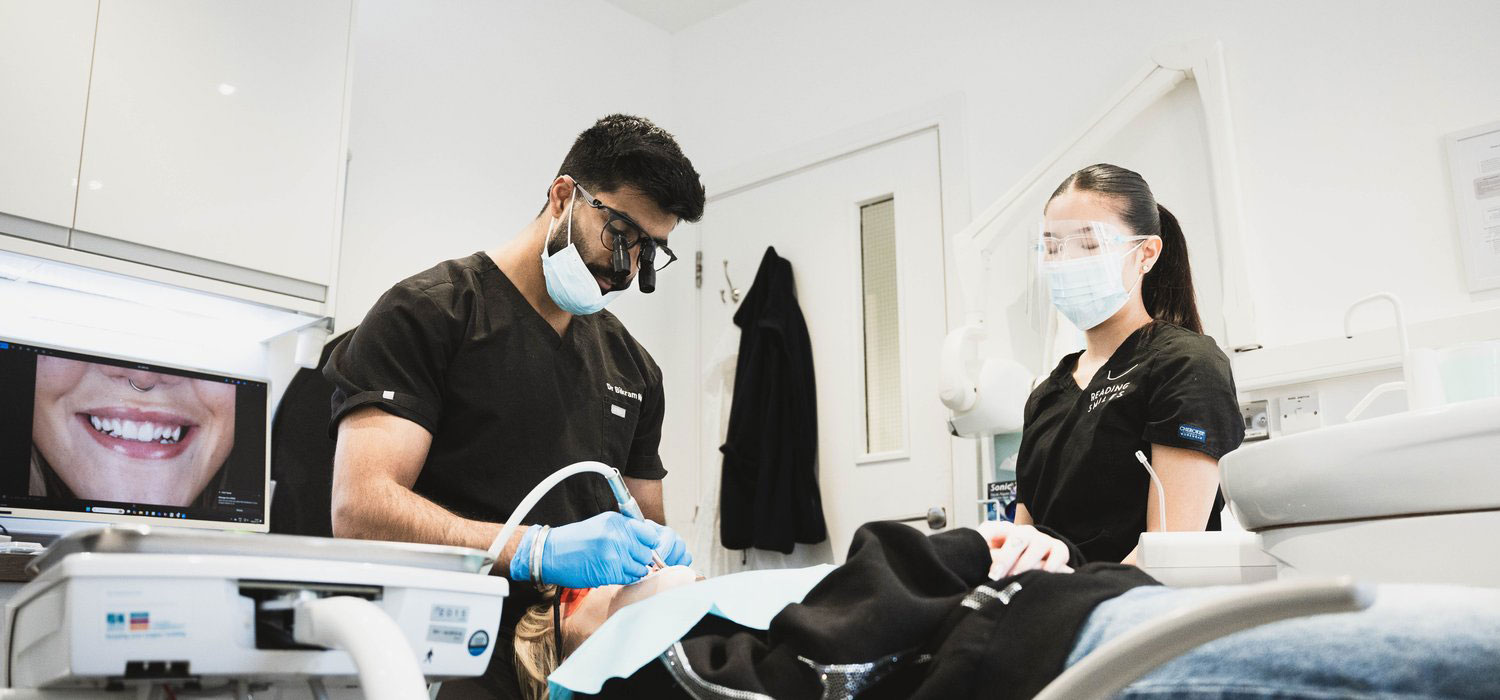
The fitting appointment is a significant moment in veneer treatment. The pieces being considered are now the finished restorations, rather than a drawing, a screen image or temporary teeth. A patient may recognise the agreed design immediately, yet still need time to describe something that looks different. Choosing a London veneer clinic involves understanding how that conversation fits into the appointment before permanent bonding.
The most useful preparation is to establish what you will be shown, what the dentist will assess and what happens if either of you has a concern. A booked fitting date should not leave the patient unsure whether there is still room for a discussion. Equally, liking the appearance does not replace the clinician’s responsibility to assess the restoration.
The Final Fit Check for Veneers in London
There are two related decisions at this stage. One concerns your preferences: whether the proposed appearance answers the brief you agreed. The other concerns clinical suitability, including how the work relates to the teeth and bite. A mirror can support the first discussion, but it cannot establish every aspect of the second. Ask the dentist to explain the checks in language you understand.
It also helps to distinguish the definitive ceramics from the temporary version. The earlier design may have established a direction, while the finished material is what will actually be bonded. If the appearance seems different, describe the difference rather than assuming it is either a fault or something you must accept. The appropriate response depends on what the team finds.
The General Dental Council treats consent as an ongoing process. Previous agreement to a treatment plan does not remove the need for a clear conversation about the next procedure. Raise uncertainty before bonding starts, so the dentist can explain the available options and the implications of any delay or alteration.
How the Fitting Processes Were Compared
This selection draws on official descriptions of veneer treatment at London and Greater London practices. Relevant features include explicit fitting stages, opportunities for patient feedback and the transfer of design information to the laboratory. The sequence starts with assessment and a clearly described try-in, then considers the records and communication supporting the final decision.
These are practical reasons to investigate a clinic, rather than comparative measurements of clinical outcomes. A practice describing a trial smile is not automatically describing its complete final-fitting protocol. Where the published information stops earlier in treatment, the entry identifies the question to resolve directly with the team.
Top 10 London Clinics to Discuss the Final Veneer Fit
- MaryleboneSmileClinic
For patients comparing veneers London, MaryleboneSmileClinic on Harley Street describes a pathway from assessment and planning through temporary feedback to final ceramic fitting. That sequence provides a useful starting point for asking how the decisions made earlier are carried into the bonding appointment.
Bring the concern back to the agreed brief. If you accepted a particular length or outline in the temporaries, ask how that preference will be checked against the definitive work. Avoid reducing the conversation to whether the veneers look generally attractive. A specific observation gives the team something to examine and explain.
Before the visit, establish when you can view the ceramics and what would happen if you wanted an alteration. Knowing that process can make the appointment feel less like a deadline and more like an informed decision.
- Harley Street Dental Studio
Seeing the actual ceramics before bonding is explicitly addressed by Harley Street Dental Studio. Its veneer process includes a try-in to assess fit, colour and bite, followed by patient approval. That places the decision about the finished work at a recognisable point in the appointment.
The next step is to understand what approval involves in your own case. A quick look and a careful discussion may feel very different to a patient, even when both occur at a fitting visit. Tell the team if you need a point explained or a feature compared with the earlier design. Ask which findings are the dentist’s clinical responsibility and which choices remain matters of preference. That distinction keeps the conversation focused without making the patient responsible for assessing technical fit.
- Sensu
An in-house ceramic studio is part of Sensu’s veneer service at its London practices. Its information also states that veneers are not fitted until the patient is happy with them. Together, those details make the route between patient feedback and ceramic work worth exploring.
A concern may be easy to describe in everyday terms but require a more precise laboratory instruction. For example, saying that an edge draws too much attention is more useful than simply asking for something more natural. Find out who translates that observation into a proposed change and when you would review it again. The presence of a studio does not establish that every alteration can happen immediately. The timetable should follow the assessed change, with any additional appointment made clear.
- London Smile Clinic
At London Smile Clinic on Clipstone Street, design records and patient feedback are linked to laboratory work on colour, texture and translucency. That connection matters when the finished veneers need to be considered against the original intention, rather than in isolation.
A patient can use the earlier records as a shared reference. Perhaps the broad shape is right, but the overall impression differs from what was discussed. Ask the team to identify which part of the appearance accounts for that difference and whether the proposed response concerns one veneer or the group. The aim is not to turn a fitting into a search for tiny imperfections. It is to resolve a meaningful uncertainty while the relevant decision can still be discussed before bonding.
- Dawood & Tanner
An earlier physical preview can be a useful reference when the ceramics arrive. At Dawood & Tanner on Upper Wimpole Street, wax-ups and an in-mouth mock-up are used to consider size, shape, position and bite. The patient can discuss what was agreed through that process rather than relying on a remembered screen image.
The important question is how the agreed mock-up informs the definitive ceramics. Ask what should remain consistent and what may look or feel different because the materials and treatment stage have changed. A temporary preview is useful evidence of a preference, but it is not the finished restoration. If the ceramics prompt a new concern, explain whether it relates to the whole design or one feature. The team can then discuss the clinical and laboratory implications instead of relying on a vague request to copy the trial exactly.
- The Welbeck Clinic
The Welbeck Clinic uses photographs, measurements and models within its veneer planning and laboratory process. Its description continues through temporary removal, ceramic fitting and bite checks. This makes it relevant to patients who want to understand how recorded information is used when the actual restorations arrive.
Ask the practice to explain the order of the appointment, including the point at which you will discuss appearance and any remaining concerns. Technical steps can occupy much of a fitting visit, so it helps to know where your observations belong. If a change is suggested, request an explanation of whether it can be assessed there or requires further laboratory work. The useful answer is a clear next step, rather than an assumption that every concern has the same solution.
- DRMR
DRMR in Knightsbridge describes ceramic fitting followed by a final review, photographs and care instructions. The distinction between those appointments is important: a later review has a role, but patients should understand which decisions are intended to be settled before the veneers are bonded.
Raise a design concern at the fitting rather than holding it back merely because another appointment is scheduled. At the same time, ask what the subsequent review is intended to assess once the work has been in use. This gives each visit a clear purpose. If the dentist recommends proceeding despite a feature that worries you, ask for the reason and the available alternatives. You should be able to explain the decision in your own words before agreeing to the next stage.
- Cosmetic Dentistry Clinic
The South Kensington practice describes an acrylic temporary prototype that allows feedback before the porcelain stage. That is relevant because the final-fitting discussion can refer to an experience the patient has actually had, rather than only an imagined result.
Keep a concise record of any change agreed during the prototype period. At fitting, the question becomes whether the definitive work reflects that agreement and how any difference should be interpreted. Avoid expecting acrylic and ceramic to be visually identical in every respect. Instead, ask the clinician to explain the features that were deliberately preserved or refined. A clear record can prevent both patient and team from having to reconstruct an earlier conversation while making the final decision.
- Pearl Dental Clinic
Pearl Dental Clinic in Kingston describes digital records, a trial smile and temporaries before final veneer fitting with resin cement. Its service covers individual veneers as well as broader treatment, so the fitting conversation may involve either one restoration or a coordinated group.
Make the relevant comparison explicit. A single veneer may need to sit comfortably beside unchanged teeth; a wider group may be judged against a different agreed brief. Ask how you will review that relationship before bonding. Also establish how the dentist distinguishes a preference about appearance from a finding that requires a clinical response. The goal is a shared understanding of what has been checked, what you are accepting and whether anything remains unresolved.
- Bespoke Smile
Several revisions to a trial can leave a patient unsure which version became the final design. Bespoke Smile’s Upper Wimpole Street practice offers a handmade Trial Smile and in-house ceramic work, making that transfer of information a concrete subject for the fitting discussion.
Ask how the trial’s agreed features are confirmed when the ceramics are available. This is particularly useful if several small changes were discussed over time. A patient should not have to rely on remembering which version was last approved. Request a clear account of the current design and the route for raising a final concern. The value of an extensive preview process is greatest when the patient understands how it connects to the actual work being fitted.
Before You Agree to Bonding
Prepare a short description of the outcome you agreed, including any feature you specifically wanted to retain or change. At the appointment, use that description to explain observations rather than searching for the right technical vocabulary. You can ask the dentist to show you what a term means before deciding whether it captures your concern.
There should also be a practical answer if the proposed next step changes. Establish what protects the teeth in the meantime, whether another visit or laboratory stage is required and how any revised cost will be explained. These are questions for the treating team, since the implications depend on the work already completed and the change being considered.
A useful fitting discussion ends with clarity about both appearance and clinical assessment. If you still do not understand the recommendation, say so before bonding begins. The aim is an informed agreement about the definitive veneers, supported by an explanation you can follow.
Source note: Official clinic treatment information, General Dental Council consent standards and NHS dental-treatment information informed this guide. Published processes support the comparisons; individual fitting decisions require clinical assessment.
