


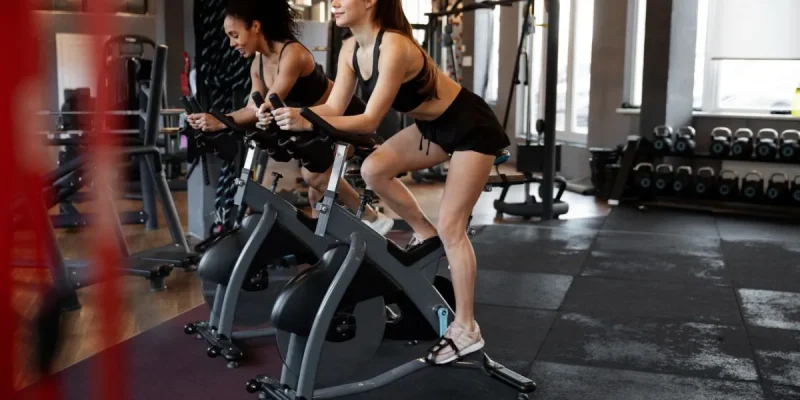
Power creates a reassuring sense of control. If the console shows the same watts as last week, riders often expect the effort to feel the same. Yet mechanical output is only one part of the cost. The body must also regulate temperature, circulate blood and manage sweat. When the room is warmer, airflow is weaker or humidity limits evaporation, the same bike power can feel substantially harder.
At a spin studio Singapore, thermal conditions should be treated as a training variable rather than background decoration. Singapore’s outdoor climate can affect riders before class, while occupancy, ventilation, fan placement and session intensity shape conditions inside. The correct response is not to panic over every temperature change. It is to understand why perceived effort, heart rate and pacing may shift even when the bike reports identical work.
External Power Does Not Measure Internal Cost
Power reports the rate of mechanical work delivered to the bike. It does not measure heat storage, skin temperature, sweat rate or cardiovascular strain. Two sessions at 180 watts can therefore impose different internal loads.
As exercise begins, only part of metabolic energy becomes mechanical work. Much of the remainder appears as heat. The body responds by increasing skin blood flow and producing sweat. These processes support cooling but add physiological demand.
When the environment makes heat loss harder, heart rate and thermal discomfort may rise at an unchanged workload. RPE then reflects the complete experience, not just the pedals.
Air Temperature Is Only One Part of the Room
A thermostat reading cannot describe the full thermal environment. Four factors interact:
Air Temperature
Warmer air reduces the temperature gradient between the skin and room, making dry heat loss less effective.
Humidity
Sweat cools primarily when it evaporates. Higher humidity can reduce evaporation, leaving more sweat on the skin without delivering equivalent cooling.
Airflow
Moving air supports convective and evaporative cooling. A rider directly in front of a fan may experience a different thermal load from someone in a still corner even when room temperature is identical.
Radiant and Occupancy Heat
Lighting, equipment and many exercising bodies add heat. Conditions can therefore change between an empty studio and the final third of a full class.
Temperature management should consider the room as a system, not a single display.
Why RPE Rises at Constant Power
Perceived exertion integrates breathing, muscular strain, cardiovascular demand, thermal discomfort and the rider’s interpretation of those signals. A warmer session adds heat-related sensations to the same mechanical task.
Research on cycling and thermal comfort shows that thermal state can influence performance and perception. Other heat-exercise research demonstrates that riders often reduce self-selected output when thermal strain increases at a fixed RPE. The relationship works in both directions: at fixed effort perception, power may fall; at fixed power, perceived effort may rise.
This is why forcing last week’s watts in different conditions can create an unintended session. The power number has remained stable, but the total stress has not.
Heart Rate May Drift Before Power Does
During prolonged work, heart rate can rise while power remains constant. Some drift is normal, but heat and dehydration can amplify it. Blood must support both working muscles and heat dissipation at the skin.
Riders should compare the combination of power, heart-rate trend, RPE and breathing. If power is stable but heart rate and RPE climb unusually quickly, thermal strain may be contributing. This does not provide a medical diagnosis, and it should not be interpreted from one reading alone.
The practical choice may be a small power reduction, more controlled pacing or a lower resistance during the next interval. Preserving session quality is more valuable than defending an absolute watt target under altered conditions.
Singapore’s Commute Changes the Starting Point
A rider who walks briskly to the studio in warm, humid weather may begin class with elevated skin temperature and sweat already present. Another rider may arrive from an air-conditioned office. The room treats them equally, but their thermal starting points differ.
Build a short transition where possible. Arrive early, change out of damp outdoor clothing, drink according to thirst and allow breathing to settle before the warm-up. Chugging excessive fluid immediately before class can create discomfort and does not instantly correct a large deficit.
The warm-up should test the starting state. If moderate power feels unusually expensive from the first minutes, use that information before committing to harder intervals.
Clothing Can Trap or Release Heat
Fabric, fit and layering influence how easily sweat evaporates. More clothing is not automatically worse, since some fabrics move moisture effectively, while some minimal garments can still cling and restrict evaporation.
Choose clothing that remains comfortable when saturated and does not require repeated adjustment. Remove unnecessary outdoor layers before class. A towel should be used to pat sweat rather than repeatedly rubbing the skin.
The objective is not to remain dry. It is to support evaporation and avoid clothing becoming another source of heat and friction.
Pace the First Work Block Conservatively
Thermal strain accumulates. The opening minutes may feel normal before heat storage becomes noticeable. Starting too aggressively can create a late-session collapse that looks like poor fitness.
Use the first sustained block as a calibration interval. Hold the lower part of the target range, observe heart-rate drift and assess how quickly breathing recovers. If the response remains normal, later work can progress.
This approach is particularly useful when the studio feels warmer than usual, occupancy is high or the rider arrived hot from outdoors.
Hydration Awareness Without Universal Prescriptions
Sweat rates vary considerably. The correct fluid plan depends on duration, intensity, prior hydration, climate exposure and individual tolerance. A standard class does not require every rider to consume the same volume.
Bring fluid and drink in a way that prevents distracting thirst without forcing intake. Riders completing multiple sessions, arriving after prolonged heat exposure or experiencing consistently high sweat losses may need a more personalised strategy.
Headache, dizziness, confusion, chills, nausea, unusual weakness or other concerning heat-related symptoms are reasons to stop and seek appropriate assistance. They should not be treated as a normal test of toughness.
Use Temperature-Aware Performance Records
When tracking progress, record basic context: bike number, class type, approximate room feel, fan exposure, pre-class commute and RPE. Exact environmental instruments are not necessary for every rider. A simple note such as “warmer, low airflow” can explain an otherwise confusing session.
The spin programmes at TFX Singapore include endurance, intervals, hills, sprints, technique and power-zone work. Temperature may influence each format differently. Longer endurance blocks accumulate heat, while repeated high-intensity work may create rapid spikes in discomfort.
Equal Watts Do Not Guarantee Equal Training Stress
Power remains valuable because it describes external work. Its limitation is pretending to describe everything. Studio temperature, humidity, airflow, clothing and the rider’s starting state can change the physiological price of the same number.
The advanced response is not to abandon power. It is to interpret it alongside RPE, heart rate, technique and thermal comfort, then pace the session that actually exists rather than the one expected from last week’s data.
Frequently Asked Questions
Why is my heart rate higher at the same power in a warmer class?
Heat dissipation can increase cardiovascular demand, while dehydration and accumulated fatigue may contribute. Judge the pattern across the session rather than one reading.
Does more sweat mean I am working harder?
Not necessarily. Sweat rate is influenced by temperature, humidity, acclimatisation, clothing and individual physiology. It is not a direct measure of calorie expenditure or workout quality.
Should I lower power when the studio feels warm?
Use RPE, heart-rate trend, breathing and technique. A small reduction may preserve the intended training zone when thermal strain makes the usual target unusually costly.
Is colder always better for indoor cycling?
No. Excessively cold airflow may be uncomfortable and room preferences vary. The goal is an environment that supports heat loss without creating distracting discomfort.

Comments are closed.